Advocacy & Crisis Support: Facilitating Care in High-Stakes Environments
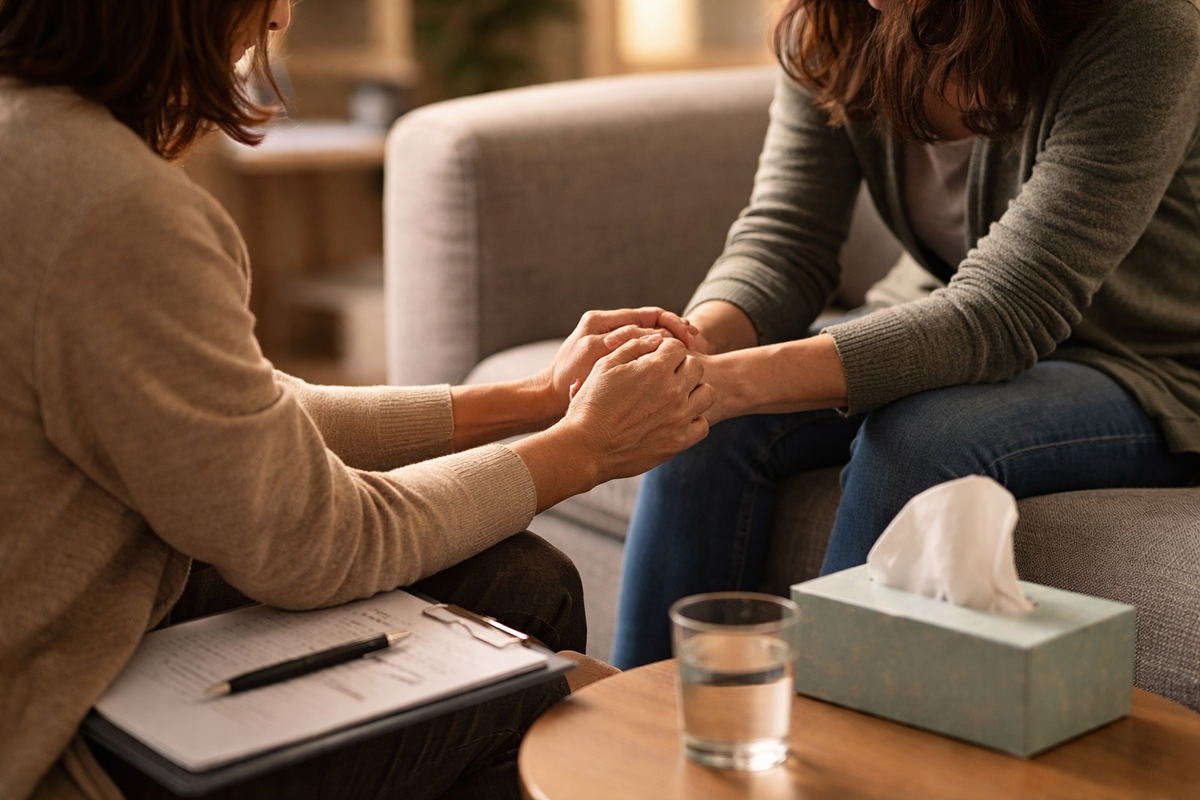
Providing direct support to survivors through crisis advocacy, facilitation, and community-based care.
Context
Over several years, I served as a trained confidential rape crisis advocate and community moderator, supporting survivors of sexual assault and domestic violence across in-person and online environments.
This work required operating in high-trust, high-stakes situations, frequently in moments of crisis, while maintaining a consistent focus on safety, autonomy and ethical care.
My Role
Crisis Advocacy
As a certified confidential rape crisis advocate:
- Staffed a confidential hotline supporting survivors in real time
- Accompanied survivors in emergency rooms during forensic exams
- Provided in-person advocacy at crisis centers
- Attended court hearings to support survivors through legal processes
- Helped individuals understand options and access available resources
Online Community Moderation
As part of a small moderation team:
- Co-managed a support group for survivors of sexual assault and domestic violence
- Designed and facilitated weekly writing prompts to support reflection and expression
- Enforced community guidelines to maintain safety, privacy and trust
- Curated and shared relevant support resources
- Responded to member needs in real time within a sensitive, peer-support environment
Approach
1. Trauma-Informed Support
Approached all interactions with a focus on:
- Survivor autonomy and choice
- Nonjudgmental, empathetic communication
- Awareness of trauma responses and needs
2. Facilitation in High-Stakes Environments
Provided steady, structured support in unpredictable situations:
- Navigating emotionally complex conversations
- Supporting individuals through medical and legal processes
- Maintaining clarity and presence under pressure
3. Safety, Privacy and Boundaries
Ensured that all environments, especially virtual, remained safe and respectful:
- Enforced clear community guidelines
- Protected confidentiality and personal information
- Balanced openness with appropriate boundaries
4. Consistency and Reliability
Built trust through sustained, dependable presence:
- Showing up consistently for hotline shifts and support sessions
- Maintaining continuity for community members over time
- Providing stable support in moments of uncertainty
Impact
- Provided direct, one-on-one support to survivors during critical moments
- Helped individuals navigate complex medical and legal systems
- Maintained a safe, structured online community for peer support
- Contributed to environments where individuals felt heard, supported and respected