Curriculum Development System Redesign
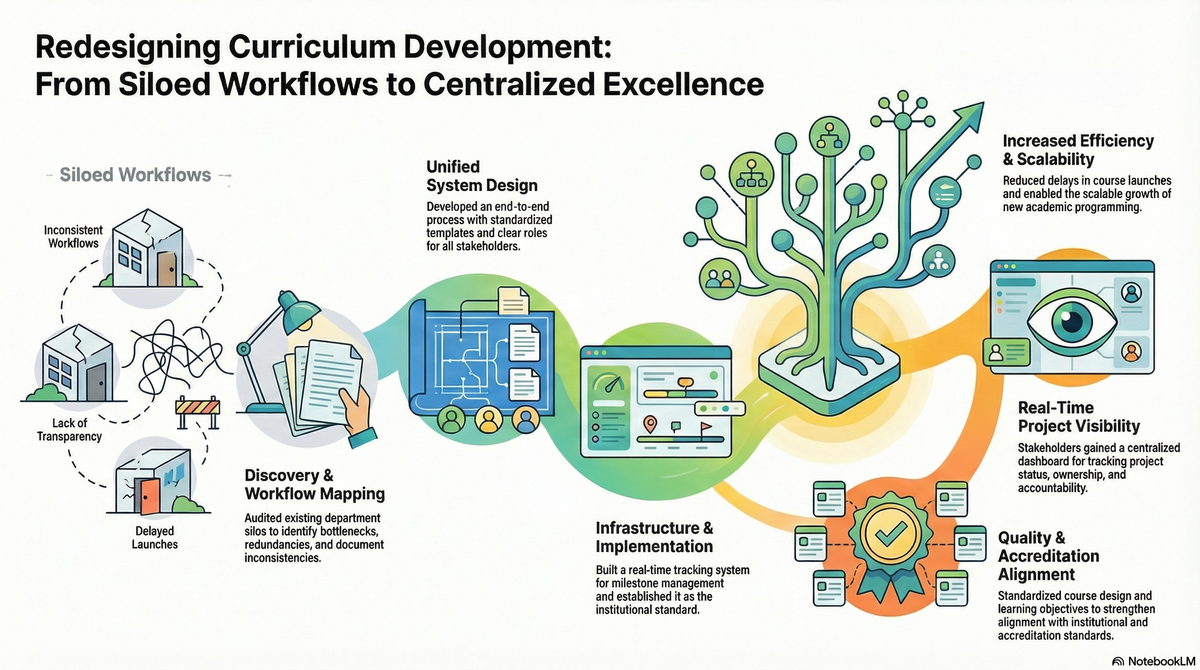
Building a centralized curriculum development system with standardized processes and real-time tracking to improve speed, consistency, and collaboration across academic programs.
Context
- Curriculum development processes varied widely across schools and departments
- No standardized workflow for proposing, developing or approving new courses and programs
- Limited visibility into project status across stakeholders
- Inconsistent timelines, documentation and expectations
- Growing need to scale program development across multiple disciplines and modalities
The Problem
- Curriculum development operated in silos with no shared process
- Lack of transparency into project progress and ownership
- Inefficiencies caused delays in course and program launches
- Inconsistent quality and documentation across deliverables
- Stakeholders lacked a single source of truth for curriculum projects
My Role
As Associate Vice President for Teaching and Learning, I partnered with the Sr. Director of Faculty Development and the Provost Advisory Group to design and implement a system that would:
- Standardize curriculum development processes across all programs
- Create a centralized, real-time tracking system for all projects
- Improve collaboration across deans, chairs, and instructional teams
- Increase transparency, accountability, and efficiency
- Support scalable growth of academic programming
Approach
1. Stakeholder Discovery and Workflow Mapping
I engaged academic deans, department chairs, faculty and instructional design teams to document existing curriculum development processes. Then, I identified variations, bottlenecks and inefficiencies across departments and mapped current-state workflows to understand the gaps and redundancies.
2. Auditing Existing Documentation and Practices
I led a review of course development materials, templates and approval processes and identified inconsistencies in learning objectives, course outlines and documentation standards. I also assessed alignment with institutional goals and expectations.
3. Designing the Standardization System
I developed a unified, end-to-end curriculum development process with clear stages of development from proposal to design to review to approval and, finally, launch. I established roles and responsibilities across stakeholders. And I standardized templates and documentation requirements.
4. Building the Real-Time Tracking Infrastructure
I created a dynamic, centralized tracking system (shared across stakeholders) with real-time visibility into project status, clear ownershp and accountability at each stage and with timeline management and milestone tracking.
5. Implementation and Change Management
I introduced the finalized system to deans, department chairs and academic leadership. I provided guidance and support for adoption and iterated on workflows based on stakeholder feedback.
6. Operationalization and Ongoing Use
I established the system as the standard process for all curriculum development. I integrated tracking into ongoing academic planning and decision-making and created a sustainable model for continuous use and refinement.
Impact
Institutional Impact
- Established a single, standardized curriculum development process across all programs
- Improved alignment between academic planning and institutional priorities
- Enabled scalable development of new programs and courses
Operational Impact
- Increased efficiency and reduced delays in curriculum development timelines
- Improved coordination across academic and instructional teams
- Created real-time visibility into project status and progress
Quality and Consistency Impact
- Standardized documentation and deliverables across all programs
- Improved consistency of learning objectives and course design
- Strengthened alignment with accreditation and institutional standards
Tools & Capabilities Demonstrated
- Systems design & operational strategy
- Process standardization & workflow design
- Project and program management
- Cross-functional leadership
- Change management